Hey folks,
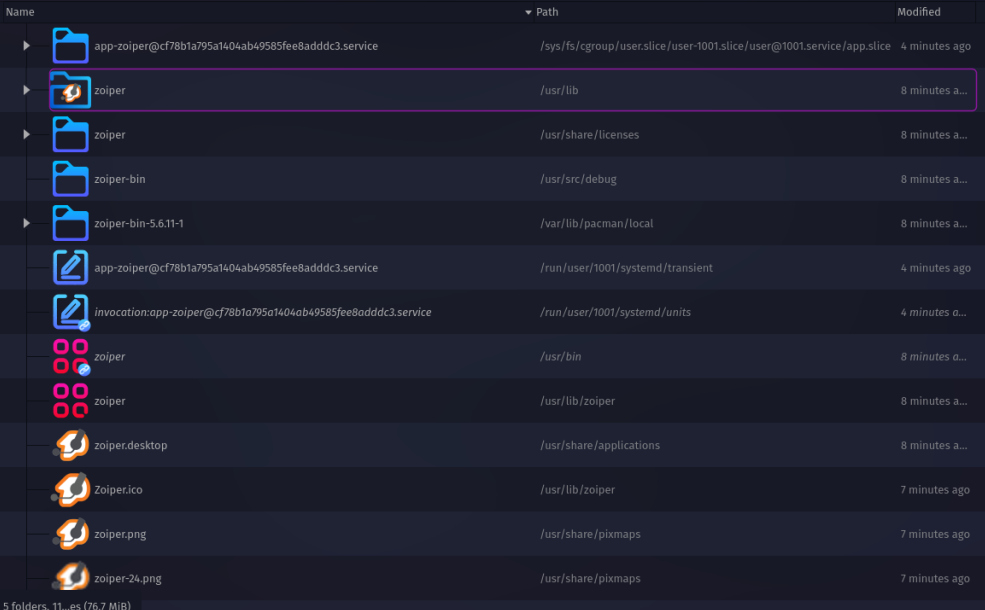
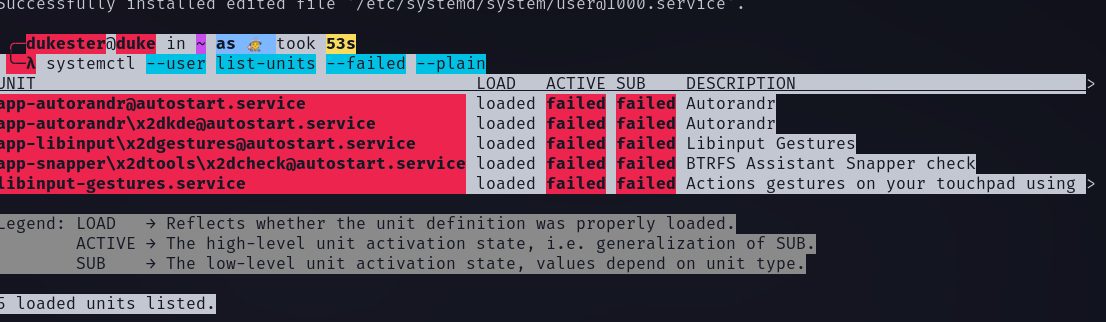
I’ve been bashing my head against the wall for the last week trying to figure out where to resolve what is probably a benign error in the journal. Ages ago, I installed Zoiper5 (zoiper-bin in the AUR) but then removed it (via paru -Rns zoiper-bin). It installed in /opt/Zoiper5. I can confirm this directory no longer exists and hasn’t for a while. However, about every 30 seconds or so, the journal will display this error: Failed to resolve executable from service. Error: "Could not find the program '/opt/Zoiper5/zoiper'" and it shows user@1000.service. I’ve checked the plasma Autostart, and it’s not listed. I tried grepping for the string Zoiper in all the places where systemd saves unit files - zippo! Nothing. I have no idea where to remove this entry so that this error message goes away. If anyone has any ideas, I would be most grateful.
Perfunctory garuda-inxi:
> garuda-inxi
System:
  Kernel: 6.17.6-zen1-1-zen arch: x86_64 bits: 64 compiler: gcc v: 15.2.1
    clocksource: tsc avail: acpi_pm
    parameters: BOOT_IMAGE=/@/boot/vmlinuz-linux-zen
    root=UUID=8dcc0c9c-8fe9-4fc6-b189-a8db2cfa3823 rw rootflags=subvol=@
    i915.modeset=1 i915.enable_guc=3 i915.max_vfs=7 quiet
    resume=UUID=a14a443b-9c6b-47d0-b49a-d9686d767b7c loglevel=3
    sysrq_always_enabled=1 nvidia-drm.modeset=1
    pci=disable_acs_redir=pci:12D8:2308
    vt.default_red=30,243,166,249,137,245,148,186,88,243,166,249,137,245,148,166
    vt.default_grn=30,139,227,226,180,194,226,194,91,139,227,226,180,194,226,173
    vt.default_blu=46,168,161,175,250,231,213,222,112,168,161,175,250,231,213,200
  Desktop: KDE Plasma v: 6.5.1 tk: Qt v: N/A info: frameworks v: 6.19.0
    wm: kwin_wayland with: krunner vt: 1 dm: SDDM Distro: Garuda
    base: Arch Linux
Machine:
  Type: Desktop System: ASUS product: N/A v: N/A serial: <superuser required>
  Mobo: ASUSTeK model: PRIME Z690-P WIFI v: Rev 1.xx
    serial: <superuser required> part-nu: SKU uuid: <superuser required>
    UEFI: American Megatrends v: 3801 date: 05/14/2025
Battery:
  Device-1: hidpp_battery_0 model: Logitech Wireless Keyboard serial: <filter>
    charge: 55% (should be ignored) rechargeable: yes status: discharging
CPU:
  Info: model: 12th Gen Intel Core i9-12900K bits: 64 type: MST AMCP
    arch: Alder Lake gen: core 12 level: v3 note: check built: 2021+
    process: Intel 7 (10nm ESF) family: 6 model-id: 0x97 (151) stepping: 2
    microcode: 0x3A
  Topology: cpus: 1x dies: 1 clusters: 10 cores: 16 threads: 24 mt: 8 tpc: 2
    st: 8 smt: enabled cache: L1: 1.4 MiB desc: d-8x32 KiB, 8x48 KiB; i-8x32
    KiB, 8x64 KiB L2: 14 MiB desc: 8x1.2 MiB, 2x2 MiB L3: 30 MiB
    desc: 1x30 MiB
  Speed (MHz): avg: 800 min/max: 800/5100:5200:3900 scaling:
    driver: intel_pstate governor: powersave cores: 1: 800 2: 800 3: 800 4: 800
    5: 800 6: 800 7: 800 8: 800 9: 800 10: 800 11: 800 12: 800 13: 800 14: 800
    15: 800 16: 800 17: 800 18: 800 19: 800 20: 800 21: 800 22: 800 23: 800
    24: 800 bogomips: 152985
  Flags-basic: avx avx2 ht lm nx pae sse sse2 sse3 sse4_1 sse4_2 ssse3 vmx
  Vulnerabilities: <filter>
Graphics:
  Device-1: Intel AlderLake-S GT1 vendor: ASUSTeK driver: i915 v: kernel
    alternate: xe arch: Xe process: Intel 10nm built: 2020-21 ports:
    active: DP-1,HDMI-A-2 empty: HDMI-A-1 bus-ID: 00:02.0 chip-ID: 8086:4680
    class-ID: 0300
  Device-2: NVIDIA GA104 [GeForce RTX 3060 Ti Lite Hash Rate]
    vendor: ASUSTeK driver: nvidia v: 580.95.05 alternate: nouveau,nvidia_drm
    non-free: 550-580.xx+ status: current (as of 2025-08; EOL~2026-12-xx)
    arch: Ampere code: GAxxx process: TSMC n7 (7nm) built: 2020-2023 pcie:
    gen: 1 speed: 2.5 GT/s lanes: 16 link-max: gen: 4 speed: 16 GT/s ports:
    active: DP-2 empty: DP-3, DP-4, HDMI-A-3, HDMI-A-4 bus-ID: 01:00.0
    chip-ID: 10de:2489 class-ID: 0300
  Device-3: Realtek Integrated_Webcam_FHD driver: uvcvideo type: USB
    rev: 2.0 speed: 480 Mb/s lanes: 1 mode: 2.0 bus-ID: 1-12.4:19
    chip-ID: 0bda:58ba class-ID: 0e02 serial: <filter>
  Device-4: Microsoft LifeCam Studio
    driver: hid-generic,snd-usb-audio,usbhid,uvcvideo type: USB rev: 2.0
    speed: 480 Mb/s lanes: 1 mode: 2.0 bus-ID: 1-3:3 chip-ID: 045e:0772
    class-ID: 0300
  Display: wayland server: X.org v: 1.21.1.20 with: Xwayland v: 24.1.9
    compositor: kwin_wayland driver: X: loaded: modesetting,nvidia
    unloaded: nouveau alternate: fbdev,intel,nv,vesa dri: iris
    gpu: i915,nv_platform,nvidia,nvidia-nvswitch d-rect: 3840x1080
    display-ID: 0
  Monitor-1: DP-1 pos: right model: Dell UZ2715H serial: <filter>
    built: 2014 res: mode: 1920x1080 hz: 60 scale: 100% (1) dpi: 83 gamma: 1.2
    size: 597x336mm (23.5x13.23") diag: 676mm (26.6") ratio: 16:9 modes:
    max: 1920x1080 min: 720x400
  Monitor-2: DP-2 pos: primary,left model: Samsung SyncMaster
    serial: <filter> built: 2009 res: mode: 1920x1080 hz: 60 scale: 100% (1)
    dpi: 92 gamma: 1.2 size: 531x298mm (20.91x11.73") diag: 609mm (24")
    ratio: 16:9 modes: max: 1920x1080 min: 640x480
  Monitor-3: HDMI-A-2 pos: right model: Dell U2414H serial: <filter>
    built: 2018 res: mode: 1920x1080 hz: 60 scale: 100% (1) dpi: 93 gamma: 1.2
    size: 527x296mm (20.75x11.65") diag: 604mm (23.8") ratio: 16:9 modes:
    max: 1920x1080 min: 720x400
  API: EGL v: 1.5 hw: drv: intel iris drv: nvidia platforms: device: 0
    drv: nvidia device: 2 drv: iris device: 3 drv: swrast gbm: drv: nvidia
    surfaceless: drv: nvidia wayland: drv: iris x11: drv: iris
    inactive: device-1
  API: OpenGL v: 4.6.0 compat-v: 4.5 vendor: intel mesa v: 25.2.6-arch1.1
    glx-v: 1.4 direct-render: yes renderer: Mesa Intel UHD Graphics 770 (ADL-S
    GT1) device-ID: 8086:4680 memory: 30.35 GiB unified: yes display-ID: :1.0
  API: Vulkan v: 1.4.328 layers: 17 device: 0 type: integrated-gpu
    name: Intel UHD Graphics 770 (ADL-S GT1) driver: mesa intel
    v: 25.2.6-arch1.1 device-ID: 8086:4680 surfaces: N/A device: 1
    type: discrete-gpu name: NVIDIA GeForce RTX 3060 Ti driver: nvidia
    v: 580.95.05 device-ID: 10de:2489 surfaces: N/A device: 2 type: cpu
    name: llvmpipe (LLVM 21.1.4 256 bits) driver: mesa llvmpipe
    v: 25.2.6-arch1.1 (LLVM 21.1.4) device-ID: 10005:0000 surfaces: N/A
  Info: Tools: api: clinfo, eglinfo, glxinfo, vulkaninfo
    de: kscreen-console,kscreen-doctor gpu: corectrl, gputop, intel_gpu_top,
    lsgpu, lact, nvidia-settings, nvidia-smi wl: wayland-info,wlr-randr
    x11: xdpyinfo, xprop, xrandr
Audio:
  Device-1: Intel Alder Lake-S HD Audio vendor: ASUSTeK driver: snd_hda_intel
    v: kernel alternate: snd_soc_avs,snd_sof_pci_intel_tgl bus-ID: 00:1f.3
    chip-ID: 8086:7ad0 class-ID: 0403
  Device-2: NVIDIA GA104 High Definition Audio vendor: ASUSTeK
    driver: snd_hda_intel v: kernel pcie: gen: 4 speed: 16 GT/s lanes: 16
    bus-ID: 01:00.1 chip-ID: 10de:228b class-ID: 0403
  Device-3: Conexant Systems (Rockwell) DELL UZ2715H
    driver: hid-generic,snd-usb-audio,usbhid type: USB rev: 2.0 speed: 12 Mb/s
    lanes: 1 mode: 1.1 bus-ID: 1-12.2:21 chip-ID: 0572:141c class-ID: 0300
    serial: <filter>
  Device-4: Microsoft LifeCam Studio
    driver: hid-generic,snd-usb-audio,usbhid,uvcvideo type: USB rev: 2.0
    speed: 480 Mb/s lanes: 1 mode: 2.0 bus-ID: 1-3:3 chip-ID: 045e:0772
    class-ID: 0300
  API: ALSA v: k6.17.6-zen1-1-zen status: kernel-api with: aoss
    type: oss-emulator tools: alsactl,alsamixer,amixer
  Server-1: PipeWire v: 1.4.9 status: active with: 1: pipewire-pulse
    status: active 2: wireplumber status: active 3: pipewire-alsa type: plugin
    4: pw-jack type: plugin tools: pactl,pw-cat,pw-cli,wpctl
Network:
  Device-1: Intel Alder Lake-S PCH CNVi WiFi driver: iwlwifi v: kernel
    bus-ID: 00:14.3 chip-ID: 8086:7af0 class-ID: 0280
  IF: wlo1 state: down mac: <filter>
  Device-2: Realtek RTL8125 2.5GbE vendor: ASUSTeK driver: r8169 v: kernel
    pcie: gen: 2 speed: 5 GT/s lanes: 1 port: 3000 bus-ID: 06:00.0
    chip-ID: 10ec:8125 class-ID: 0200
  IF: enp6s0 state: up speed: 2500 Mbps duplex: full mac: <filter>
  IF-ID-1: br-1f7862558da6 state: down mac: <filter>
  IF-ID-2: br-7bfc84ea431e state: down mac: <filter>
  IF-ID-3: br-82d31aa0b51e state: up speed: 10000 Mbps duplex: unknown
    mac: <filter>
  IF-ID-4: br-960c3623af4c state: down mac: <filter>
  IF-ID-5: br-b787944b7593 state: up speed: 10000 Mbps duplex: unknown
    mac: <filter>
  IF-ID-6: br-b90412b2529c state: down mac: <filter>
  IF-ID-7: br-c3a5729d4cf6 state: down mac: <filter>
  IF-ID-8: br-e0cf0c4bc03a state: down mac: <filter>
  IF-ID-9: br-e9c38ec2b98c state: up speed: 10000 Mbps duplex: unknown
    mac: <filter>
  IF-ID-10: docker0 state: down mac: <filter>
  IF-ID-11: veth243fe9c state: up speed: 10000 Mbps duplex: full
    mac: <filter>
  IF-ID-12: veth957ac1b state: up speed: 10000 Mbps duplex: full
    mac: <filter>
  IF-ID-13: vethb536c0f state: up speed: 10000 Mbps duplex: full
    mac: <filter>
  IF-ID-14: virbr0 state: down mac: <filter>
  IF-ID-15: virbr1 state: down mac: <filter>
  IF-ID-16: virbr2 state: down mac: <filter>
  Info: services: NetworkManager, smbd, sshd, systemd-timesyncd,
    wpa_supplicant
Bluetooth:
  Device-1: Intel AX201 Bluetooth driver: btusb v: 0.8 type: USB rev: 2.0
    speed: 12 Mb/s lanes: 1 mode: 1.1 bus-ID: 1-14:9 chip-ID: 8087:0026
    class-ID: e001
  Report: btmgmt ID: hci0 rfk-id: 0 state: up address: <filter> bt-v: 5.2
    lmp-v: 11 status: discoverable: no pairing: no class-ID: 6c0104
RAID:
  Hardware-1: Intel Volume Management Device NVMe RAID Controller driver: vmd
    v: 0.6 port: N/A bus-ID: 00:0e.0 chip-ID: 8086:467f rev: class-ID: 0104
Drives:
  Local Storage: total: 6.37 TiB used: 3.01 TiB (47.3%)
  SMART Message: Unable to run smartctl. Root privileges required.
  ID-1: /dev/nvme0n1 maj-min: 259:1 vendor: Samsung model: SSD 980 PRO 1TB
    size: 931.51 GiB block-size: physical: 512 B logical: 512 B speed: 63.2 Gb/s
    lanes: 4 tech: SSD serial: <filter> fw-rev: 5B2QGXA7 temp: 36.9 C
    scheme: GPT
  ID-2: /dev/nvme1n1 maj-min: 259:0 vendor: Samsung model: SSD 990 PRO with
    Heatsink 2TB size: 1.82 TiB block-size: physical: 512 B logical: 512 B
    speed: 63.2 Gb/s lanes: 4 tech: SSD serial: <filter> fw-rev: 4B2QJXD7
    temp: 41.9 C scheme: GPT
  ID-3: /dev/sda maj-min: 8:0 vendor: Seagate model: ST4000NE001-2MA101
    size: 3.64 TiB block-size: physical: 4096 B logical: 512 B speed: 6.0 Gb/s
    tech: HDD rpm: 7200 serial: <filter> fw-rev: EN01 scheme: GPT
  SMART Message: Unknown smartctl error. Unable to generate data.
Partition:
  ID-1: / raw-size: 1.79 TiB size: 1.79 TiB (100.00%) used: 722.24 GiB (39.5%)
    fs: btrfs block-size: 4096 B dev: /dev/nvme1n1p2 maj-min: 259:7
  ID-2: /boot/efi raw-size: 300 MiB size: 299.4 MiB (99.80%)
    used: 668 KiB (0.2%) fs: vfat block-size: 512 B dev: /dev/nvme1n1p1
    maj-min: 259:6
  ID-3: /home raw-size: 1.79 TiB size: 1.79 TiB (100.00%)
    used: 722.24 GiB (39.5%) fs: btrfs block-size: 4096 B dev: /dev/nvme1n1p2
    maj-min: 259:7
  ID-4: /var/log raw-size: 1.79 TiB size: 1.79 TiB (100.00%)
    used: 722.24 GiB (39.5%) fs: btrfs block-size: 4096 B dev: /dev/nvme1n1p2
    maj-min: 259:7
  ID-5: /var/tmp raw-size: 1.79 TiB size: 1.79 TiB (100.00%)
    used: 722.24 GiB (39.5%) fs: btrfs block-size: 4096 B dev: /dev/nvme1n1p2
    maj-min: 259:7
Swap:
  Kernel: swappiness: 133 (default 60) cache-pressure: 100 (default) zswap: no
  ID-1: swap-1 type: zram size: 31.08 GiB used: 3.86 GiB (12.4%)
    priority: 100 comp: zstd avail: lzo-rle,lzo,lz4,lz4hc,deflate,842
    dev: /dev/zram0
  ID-2: swap-2 type: partition size: 34.2 GiB used: 0 KiB (0.0%)
    priority: -2 dev: /dev/nvme1n1p3 maj-min: 259:8
Sensors:
  System Temperatures: cpu: 45.0 C mobo: N/A
  Fan Speeds (rpm): N/A
Info:
  Memory: total: 32 GiB note: est. available: 31.08 GiB
    used: 12.31 GiB (39.6%)
  Processes: 625 Power: uptime: 1d 16h 42m states: freeze,mem,disk
    suspend: deep avail: s2idle wakeups: 0 hibernate: platform avail: shutdown,
    reboot, suspend, test_resume image: 12.37 GiB services: org_kde_powerdevil,
    power-profiles-daemon, upowerd Init: systemd v: 258 default: graphical
    tool: systemctl
  Packages: 2735 pm: pacman pkgs: 2717 libs: 584 tools: octopi,pacseek,paru
    pm: appimage pkgs: 0 pm: flatpak pkgs: 18 Compilers: clang: 21.1.4
    gcc: 15.2.1 alt: 13/14 Shell: Bash v: 5.3.3 default: fish v: 4.1.2
    running-in: kitty inxi: 3.3.39
Garuda (2.11.1-1):
  System install date:     2024-10-16
  Garuda release:          240428
  Last full system update: 2025-11-02
  Is partially upgraded:   No
  Relevant software:       snapper NetworkManager dracut nvidia-utils nvidia-open-dkms garuda-hardware-profile-nvidia garuda-hardware-profile-standard garuda-hardware-profile-standard-x11
  Windows dual boot:       Probably (Run as root to verify)
  Failed units:
--- System Health Check Report ---
24/25 checks run in 0.76 seconds ⌛
Powered by garuda-health 🦅

--- INFO ---
 - A reboot is pending (update applied since last reboot)

✅ System health check passed. No issues found.